

How to Manage the Ecommerce Peak Season Demand
Peak retail season can be one of the most rewarding times for ecommerce – but at the same time – the most stressful. While the influx of orders offers many opportunities for retailers, warehouses and logistics providers, it also puts serious strain on order fulfilment processes and the systems used to manage them. As new online purchasing habits collide with peak season sales, online retailers can expect larger shipping volumes, carrier capacity issues, rising transport costs, and delivery delays. With record-breaking order volumes coming and shipping issues arising, it's more important than ever to be well prepared for peak season.

In a heavily digital-led era, consumer behaviours have changed rapidly. The "I want it now" environment, formed largely out of the so-called 'Amazon Effect', means many online retailers are changing their strategies to be able to meet their customers' 24/7 shopping needs. As retailers work to keep ahead of growing demand, they are looking to outsource their logistics and partner with a 3PL that can offer streamlined fulfilment and shipping solutions.
As competition is currently so high, customer loyalty is hard to retain. Something as small as a payment error, missed order or delivery issue can be enough to lose even a long-term customer, so processes need to run as smoothly as possible to maintain successful relationships across all stages of the e-commerce journey.
When Is The Ecommerce Peak Season?
Peak season for ecommerce typically runs from November to January as demonstrated by the graph below from The Office of National Statistics UK internet retail sales data, and includes multiple seasonal events that influence ecommerce sales.
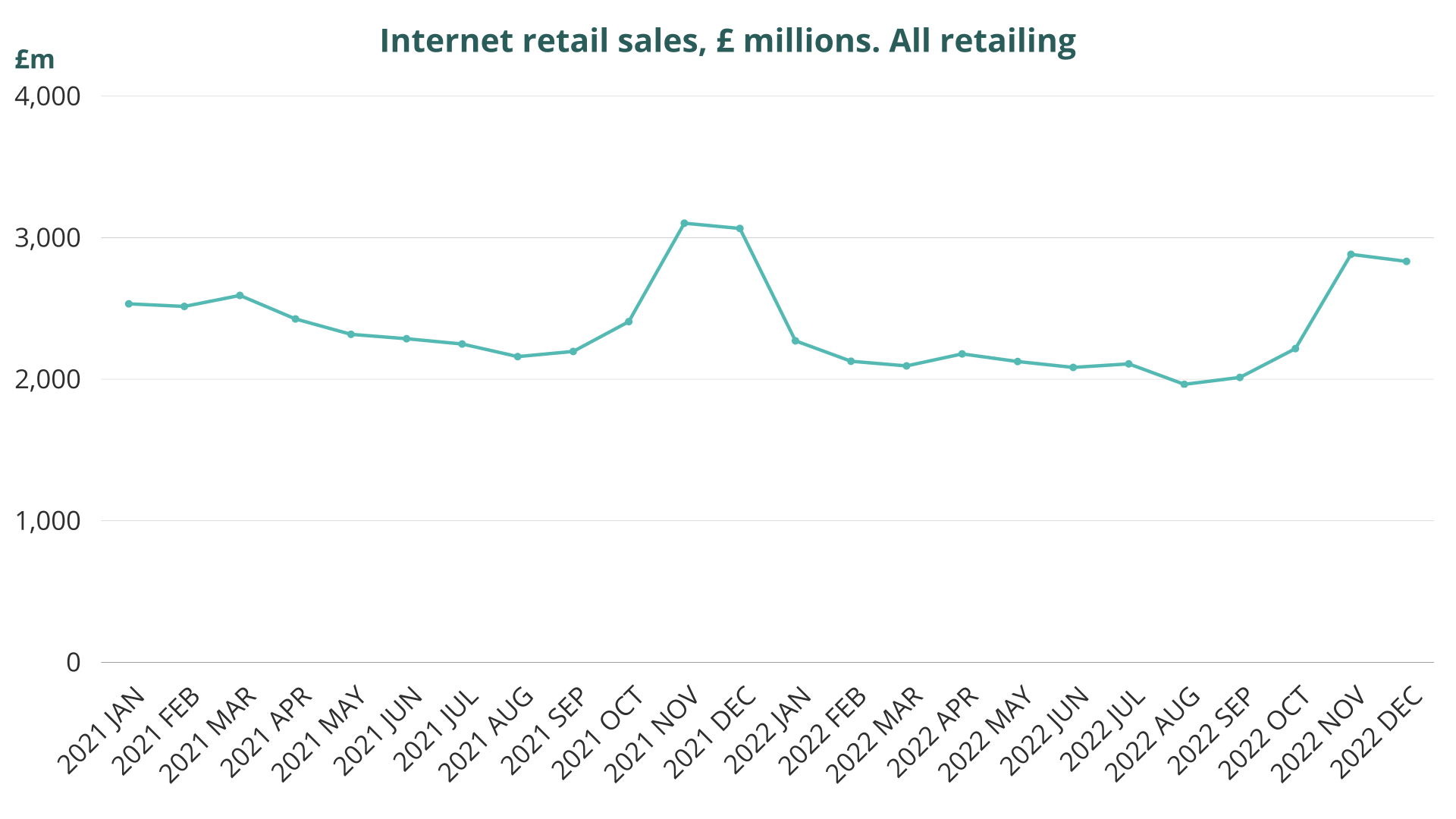
In November, Black Friday and Cyber Monday have a huge impact on online order volumes – a large amount of retailers no longer only offer sales on the Black Friday weekend, it can be a week or month-long event. December sees an influx of orders as shoppers are buying Christmas gifts, and January is a busy month due to January sales and returns or exchanges of unwanted Christmas presents.
Online Order Volumes for Black Friday 2025 vs Previous Years
Online order volumes during the Black Friday period have grown significantly year on year. In 2025, Ecommerce customers dispatched over 366,000 orders during the Black Friday period - up +17.9% on 2024, and a staggering +279.6% on 2019, representing nearly four times the volume in just six years.
Looking at the broader November picture, the growth is even more striking. November 2025 saw 1.51 million orders placed - the biggest single month on record, sitting +54.7% above the monthly average for the rest of the year. November alone accounts for roughly 1-in-8 of all annual orders, confirming it as a category of its own.
When we look at the Black Friday week itself, the data challenges the assumption that Black Friday is the peak. Black Friday (28 Nov 2025) was the biggest day for orders placed, with 87,131 received, but Cyber Monday (1 Dec 2025) was the biggest day for dispatches, with 94,393 orders shipped, +43.9% more than Black Friday. The weekend in between tells its own story: Saturday and Sunday saw dispatch rates of just 44.3% and 42.2% respectively, meaning more than half of weekend orders weren't fulfilled on the day they were placed.
The year-on-year trajectory is consistent and unbroken. From 2022 to 2025, November dispatched orders grew from 879,122 to 1,323,242, a +50.5% increase in three years. Even outside of peak, growth held firm: dispatched orders grew in 11 out of 12 months in 2025, with November's +21.5% YoY growth rate more than double the annual average of +9.8%.
Peak season for Ecommerce businesses isn't a single day — it's a sustained operational surge that builds across the full final week of November and into December. The businesses best placed to capitalise are those treating it as a season, not an event, and planning fulfilment capacity accordingly.
When Should I Start Preparing For The Ecommerce Peak Season?
The best time to prepare for peak season is a good few months earlier. Customers want fast, accurate deliveries, and by having the relevant technology and innovative order management software, you'll be able to offer your clients access to a large network of couriers – something that will make you stand out over competitors.
Online shoppers now choose convenience over brand loyalty, meaning how orders are picked and packaged, delivery costs and timings, and ease of returns all matter.
We've put together some actionable strategies and tactics you can implement to increase your ecommerce peak season success this year:
1. Stock up and plan the right inventory
It can often feel like a balancing act to ensure you have enough stock to cover the Black Friday/Cyber Monday to Christmas season – but not too much – as storing slow-moving stock can be costly and take up valuable warehouse space. But how do you know what's enough and what isn't?
Transparency and visibility are key when it comes to being prepared for peak season. As a minimum, you should:
- Have a clear view of your current stock levels
- Know where everything is being stored
- Have access to previous order data
A cross-analysis of last peak season's order data and current stock availability highlights where there might be shortages and excesses of particular products. Accurate forecasting, as well as having a clear picture of your inventory management, means fewer sleepless nights, as you'll know what you need to order in from suppliers more frequently so you can continue to fulfil your customer orders.
Investing in ecommerce management software will help determine which products are likely to be in high demand while automatically syncing real-time stock levels. The software allows you to keep a close eye on your daily stock levels, meaning you can use further clearance sales during peak times to help clear extra inventory. Free up shelf space and convert your stock into cash.
Real-time problems require real-time solutions, and smart warehouse technology allows you to analyse and even predict trends to anticipate the needs of your customers and prevent delays caused by supply chain disruptions.
2. Automate order processing
Customer expectations are at an all-time high – there will be no room for errors when it comes to picking and packing orders this season. Something as small as an incorrect order or missing item is enough for online retailers to lose customer loyalty.
With high volumes of orders, it can be easy to make mistakes when handling the order process. Automating your order process by implementing an order management system will reduce errors and help deliver a more responsive and consistent service, which is especially important when employees are extra busy.
In the US, 85% of retailers haven’t digitised their entire supply chain & are still relying on manual methods. An order management system is one option you can use to add automation to your existing order processes, allowing you to take control of the full dispatch process from picking, packing, to shipping orders.
Data collection, processing and analysis are one area that is guaranteed to change for the warehousing sector in the future. In fact, many businesses have already switched to fully digital data management systems, providing greater efficiency, security and accessibility across all daily operations.
Alongside having an order management software in place, we recommend implementing mobile barcode picking. Mobile barcode picking is an extremely popular, widely used technology in distribution centres and warehouses that have outgrown their paper-based processes. 98% picking accuracy is industry standard. Barcode scanners can save valuable time and reduce errors with up to 100% picking accuracy. This allows you to book your inbound deliveries and manage warehouse inventory, reduce errors, and provides real-time inventory visibility.
With the continued development of self-driving cars and delivery drones, customers' expectations may soon shift from 'same day' to 'same hour' – creating an urgent need to streamline warehouse technology and potentially transform how items are picked, how labels are printed, and how employees and machines work in unison.
3. Increase shopping and system integrations
When you manage different online stores or offer your products through marketplaces like Amazon, it can be difficult to keep track of all incoming orders and stock levels for each ecommerce store.
For this reason, it can be helpful to connect all your online stores and marketplaces to one order management system, like Mintsoft. To run your business efficiently throughout peak season, you will likely need to connect to additional integrations such as:
- Inventory management software
- Warehouse management software
- Couriers
- Multi-carriers
- Accounting systems
By connecting online stores and marketplaces into one account, you can capture new audiences and sell wherever you are. Mintsoft offers over 175+ integrations, including shopping cart and marketplace integrations, such as WooCommerce, Shopify, Magento, and Amazon. Explore all the integrations Mintsoft has to offer.
Managing all your systems in one place also means you can easily switch between different integrations to process orders. This means your warehouse, inventory, and shipping systems can communicate data in real-time.
If you're unable to centralise control of all of the systems you need, you may find yourself manually transferring data from one system to another to perform tasks such as raising invoices or updating inventory levels – which is far from the most efficient way to work.
4. Get your logistics in place
One of the biggest challenges during the peak season is shipping. If you're doing everything in-house, make sure your fulfilment team is ready to prepare and ship high volumes of products as fast as they can. If it's becoming too much, it might be time to consider outsourcing this responsibility to a third-party logistics company.
Customers are forever demanding shorter and cheaper delivery times. Strategies such as "Same-day delivery", "Express delivery" or "Next day delivery" are all prominent crowd pullers. According to Save My Cent:
- 24% of consumers would spend more to qualify for free shipping.
- 73% of people are more likely to decide to buy an item if it includes free shipping.
Warehouse and logistics management are crucial for the peak season. Implementing a warehouse management system helps you take control of your tasks and increase staff productivity, which can save you time and money. Adopting smart shipping rules means courier services can be automatically selected based on the criteria you define.
As a business owner, there is a lot to consider when selecting your couriers. Some of the important aspects include:
- Warehouse/storage options
- Delivery region (Nationwide or Worldwide)
- Speed of dispatch
- Delivery timeframe options
- Tracking data and customer communications
- Service Level Agreements (SLAs)
It's possible that a single courier cannot offer everything you require; therefore, you may choose to partner with multiple. Having a cohort of delivery partners gives you greater flexibility – if one courier cannot accommodate your shipment, you have an alternative method of delivery to ensure customer satisfaction.
5. Overcome carrier capacity issues
Carrier capacity is one of the most consistently underestimated challenges of peak season. During the Black Friday to Christmas period, major carriers operate at or near full capacity, and that means higher surcharges, longer collection windows, and less flexibility if something goes wrong. Booking carrier capacity early, before volumes spike, gives you more options and better rates.
A multi-carrier strategy is the most effective way to protect your fulfilment operation when demand peaks. Rather than relying on a single carrier, connecting to several means you always have an alternative if one cannot accommodate your shipment volumes or service requirements. It also gives you the flexibility to route orders to the most cost-effective carrier based on destination, weight, or delivery speed.
When evaluating which carriers to work with, consider:
- Service coverage: Do they deliver to all the regions your customers are in, including international if relevant?
- SLA reliability during peak: What are their guaranteed delivery windows in November and December specifically, not just standard terms?
- Surcharge transparency: What peak-season fees apply, and when are they triggered?
- Tracking and communications: Can they provide real-time tracking data that feeds back into your system and your customers' order updates?
- Returns handling: Do they support return collections, and how quickly are items processed back to your warehouse?
Mintsoft's carrier integrations allow you to set smart shipping rules that automatically select the right carrier based on criteria you define - delivery speed, cost, destination, or order value. During peak season, this removes the manual decision-making from your team at exactly the point when they have the least time to make it.
6. Exceed customer expectations
85% of shoppers wouldn't purchase from a brand again due to a poor delivery experience, but online sellers can easily get caught up in day-to-day operations and leave the last-mile decisions until it's too late. Which is why exceeding customer expectations is so important. If your customer's number one query is "Where's my order?" pinpoint them to live order tracking, so they can follow their parcel's journey. Better functionality means fewer customer service tickets to deal with during what's going to be an incredibly busy but successful time for your business.
Another way of adding value is to help them rate shops and find the best delivery prices and options. You can advise on delivery cut-offs by carrier, which meet your customers' shipping expectations, and impact the end recipient and their overall experience.
7. Ensure continuous improvement
When selling products online, product returns are inevitable – especially during peak season, when people are buying more products than at any other time of the year. Whether it's clothes that don't fit, fragile goods that are damaged, or electronics that are faulty, consumers will return their items if they aren't as expected.
Efficient and effective product returns management is part of the customer journey that is as important as sales and order management. It is important to make sure your customers have a clear understanding of your returns policy and that it meets any requirements set out by consumer rights.
Having a dedicated resource for returns management is important as processes can be complex. It ensures:
- Efficiency in processing returns promptly
- Enhanced customer satisfaction by prioritising return requests
- Valuable insights for quality control and process improvement
- Accurate tracking and reporting of return data
- Reduced costs associated with returns
- Compliance with legal requirements
- Continuous refinement of returns management processes for optimal efficiency and customer service
If handling returns internally isn't manageable, working with a third-party returns management company offers benefits such as specialised expertise, scalability, cost savings, efficient processes, enhanced customer experience, access to analytics, and international capabilities. It allows businesses to optimise returns management while focusing on core operations and growth.
Adding returns management software to your tech stack can further streamline your returns process by utilising automation. Returns management software can help you automate customer communications during the returns process, process refunds when required, and give you better visibility and tracking of returned goods.
8. Ensure continuous improvement
Once you're done with the push for the ecommerce peak season, take time to analyse how it all went. What went well? What needs improvement? Don't forget to look at every area affected by the peak season: your website, customer service, shipping, and marketing efforts.
While order management software is vital during the peak season, it also helps you to stay streamlined across the entire year. With online sales set to increase year-on-year, cloud-based technology will help you overcome challenges and capitalise on opportunities every month of the year. It can also allow you to scale up or scale down depending on the expected (or even unexpected) peaks and troughs throughout the year.
Get Prepared For The Ecommerce Peak Season with Mintsoft
Start by making changes to your processes and the tech that you use, but don't forget to have a conversation with your customers to get the most information about what's ahead for you during peak season.
Having order management software (OMS) can help streamline operations by allowing for constant tracking and active monitoring of purchases and inventory levels across all available channels at every stage of the fulfilment process, rectifying any issues if they happen.
Commonly initialised as OMS, an order management software or system provides a centralised platform for orders from any channel and helps drive efficiencies from initial order creation right through to delivery of your product.
One of the key benefits of implementing an OMS is the ability to take control of inventory management by simplifying processes with automation. Mintsoft allows users to easily move stock from location to location with simple scanning steps for replenishment or putaway. This process is done by using in-location stock movements, setting rules to automate what happens to orders during packing based on triggers like the delivery option selected, value and weight – removing the need for manual processes and reducing time spent on such tasks.
Ecommerce and multichannel inventory management software also gives users automated insights into product information, so you know the best place to store inventory and how to handle certain items (fragile, flammable, etc.). Inventory tracking software also allows you to make data-driven insights by automatically monitoring stock levels and sales data for each item, and helps to improve the efficiency of adding new items to inventory, tracking sales, and updating stock levels.
Mintsoft's OMS works perfectly for both 3PLs and online sellers, offering both a means of communication and perfect visibility of what lies ahead. With over 60 standard marketplace integrations and over 80 UK and worldwide courier integrations, it helps you get on top of your inventory with real-time stock visibility.
If you'd like more information on how to choose the right OMS for your business, please read our Complete guide to Order Management Systems.
To find out how best to improve fulfilment and order management in advance of peak-time ecommerce sales, book a demo with a member of the team