

A Warehouse Operations Management Guide: Process & Challenges
Effective warehouse management has several benefits including ensuring better customer service, faster and more efficient order fulfilment, and greater warehouse productivity. While poor warehouse management can lead to delayed deliveries, warehouse workers working overtime to correct mistakes, and slow order delivery that can negatively impact customer satisfaction. In this post, we explore the essential processes and challenges of warehouse management.

Contents
- What is warehouse management?
- Why is warehouse management important?
- Inventory management vs warehouse management
- Warehouse management processes
- Warehouse management strategies
- What is a warehouse management system?
- The main challenges faced in warehouse management
- Warehouse best practices to improve your warehouse management
- Monitoring and reporting in warehouse management
- How Mintsoft WMS system can help you with warehouse management
- Warehouse management FAQs
What is warehouse management?
Warehouse management refers to the processes and operations that help with the day-to-day operations needed to run a warehouse. Stock control, shipping, distribution, and employee management are all essential to warehouse management. Warehouse management involves monitoring and optimising these processes to make them faster and more efficient.
Why is warehouse operations management important?
By making your operational processes and procedures more efficient, warehouse management can deliver a number of benefits to your business. While poor warehousing management can have a knock-on effect on your business.
For example, insufficient inventory management, poor picking-and-packing processes and procedures, and poor delivery practices can lead to the wrong orders being sent out and to delays in delivery. This can give your customer satisfaction levels a huge hit with 23% of consumers saying they would not buy from an online retailer again after experiencing a delivery delay.
Warehouse management can help reduce mistakes, ensure packages are delivered on time, and ensure you can quickly address any issues such as low stock levels.
Inventory management vs warehouse management
While inventory management and warehouse management are closely tied together and depend on each other to make sure items are shipped out on time, they’re distinctly different. Inventory management refers to the monitoring and management of a company’s inventory. It covers ordering, storing, using, and selling of inventory, making sure inventory is effectively managed at each stage of the process.
In comparison, warehousing management involves the observance and optimisation of all the processes involved in the successful running of a warehouse. These include: inventory management, order fulfilment, employee management, and the effective use of space and storage.
Warehouse management processes
Let’s take a look at the main processes associated with warehouse management.
1. Receiving
The first step in the order fulfilment process involves receiving inventory at the warehouse. At this stage, warehouse employees must unload items and inspect them for any order mistakes or damage. Employees receiving items must update their inventory records to reflect the change in stock levels.
2. Put-away
Once items have been checked and records have been updated, warehouse employees must move the new stock to the right location safely, quickly, and efficiently.
3. Storage
Inventory may be stacked on shelves, containers, pallets, or placed in labelled bins. Efficient storage allows your team to quickly and efficiently retrieve the items they need at later stages in the process. Make sure items are easy to locate, safely stored, and that you’re making the best use of warehouse space.
4. Picking
Picking is about retrieving an item requested via a customer order and preparing it. With many online shoppers expecting same or next-day delivery, there is pressure on pick-and-pack warehouse employees to be responsive, fast, and flexible in order to make sure tight delivery schedules are met.
5. Packing
Packing involves making sure you identify the right packaging for your item in terms of size, protection, and durability in relation to shipping time and destination. Beyond choosing the right packaging, you should weigh the item and address it with an appropriate shipping label.
6. Shipping
The final stage involves shipping out a prepared order to a customer. This stage involves loading items onto delivery transportation and making sure they get shipped to the right destination. To improve this stage, you want to make sure you’re sending out items in the most efficient and cost-effective way possible.
Warehouse management strategies
Let’s review some of the most common warehouse management strategies.
1. Cycle counting
Cycle counting is an inventory management technique in which you regularly count small subsections of your inventory to make sure you have the correct amount of stock.
2. Zone picking
Zone picking involves different parts of an order being stored in different zones and different teams being assigned to pick and sort from within that zone. This approach makes the picking process faster and more efficient.
3. FIFO
First In, First Out is a warehouse inventory control method in which perishable goods are protected from expiring before they can be shipped. The methodology holds that the first items to come into a warehouse are the first to leave, reducing waste.
4. FEFO
In comparison, FEFO stands for First Expired, First Out. This approach holds that the items that expire first must be used first.
5. Batch packing
Batch packing is when warehouse employees pick and pack items for multiple orders at once to help ensure efficiency.
6. Pull system
As a component of the lean manufacturing principles, a pull system is when items are only pulled once they’ve been ordered, rather than pulling items based on forecasts. This approach helps conserve employee energy and supports greater productivity.

What is a warehouse management system?
The majority of effective warehouse management strategies include warehouse management software (WMS). You can use a WMS to effectively manage and track inventory levels, orders, and deliveries. You can use a WMS to automate much of your warehouse management processes, helping to potentially save you time and money and improve the productivity of your staff by freeing them up for other tasks.
To read up on warehouse management systems and what they can do, check out this post.
Critical Challenges and Modern Solutions
Transforming the existing challenges list into a problem–solution model with authoritative guidance:
Staff Retention
High turnover disrupts operations, increases training costs, and erodes productivity. Warehouses often struggle to keep staff engaged due to repetitive tasks, peak-season pressure, and limited progression pathways.
Solution: Implement WMS-Based Labour Management Systems — empowering teams with clear performance data, automated task allocation, and safer, more predictable workflows that boost satisfaction and retention.
Damaged Stock
Poor handling, inefficient storage layouts, and manual errors contribute to stock damage, directly harming profitability.
Solution: Use Intelligent Inventory Tracking & Guided Putaway — ensuring goods are stored in optimal locations with scanner-led routes that minimise risk and prevent improper handling.
Inaccurate Inventory Levels
Discrepancies between system data and physical stock create fulfilment delays, order errors, and customer dissatisfaction.
Solution: Adopt Real-Time Inventory Scanning & Cycle Counting Automation — reducing manual intervention and maintaining continuous accuracy without disruptive full-stock takes.
Slow Order Processing
Inefficient picking paths, siloed systems, and manual paperwork stretch fulfilment timelines and introduce unnecessary bottlenecks.
Solution: Deploy Automated Pick Path Optimisation & Integrated Carrier Management — enabling faster, more accurate order flow from pick to ship.
Limited Warehouse Space
Growing SKU ranges and seasonal surges can push storage capacity to its limits.
Solution: Leverage Slotting Optimisation & JIT Replenishment Tools — maximising available space while ensuring high-demand items remain accessible.
Lack of Visibility Across Operations
Fragmented data makes it difficult for managers to make informed decisions or identify emerging issues in real time.
Solution: Use Centralised, Real-Time Operational Dashboards — providing complete transparency across inventory, labour, orders, and carrier operations.
Warehouse best practices to improve your warehouse management
Let’s explore some of the best practices you can use to improve your current warehouse management.
Automate processes where possible
You can use automation tools to automate much of the receiving, picking and packing, and shipping process. Warehouse software tools and artificial intelligence, such as AI-based picking-and-packing robots and autonomous vehicles, can be an essential part of an efficient warehouse.
The use of these tools speeds up operations, reduces costs, helps cut down on manual errors, and gives employees time to focus on other tasks. McKinsey says that automation can improve productivity in the warehouse by up to 25%.
Implement zone mapping in your warehouse
To streamline receiving, picking, packing, and shipping processes in your warehouse, you can divide them based on different product factors such as weight, size, and how often those items are ordered. Once you’ve chosen which factors you’ll focus on, create a clear zone map and label each section of your warehouse.
Use barcode scanning to reduce errors
You can use RFID and barcode scanners to scan items as soon as they enter the warehouse. Use these tools to track and organise your stock by scanning the barcodes on the items that come into the warehouse. These tools help to free up employee time and reduce manual errors, they can potentially improve up to 100% of order picking accuracy.
Put in place reward processes where possible
As we cover above, employee turnover is a huge issue in the warehouse. As such, putting in place reward schemes to help improve productivity and improve employee retention can be an essential part of running a successful warehouse.
Write out a clear rewards policy and inform your employees of what they can expect for hitting certain milestones such as loyalty to the company or finishing certain tasks faster. Trial different rewards such as bonuses, gift cards, or extra days off to see which work best.
Commit to regular layout reviews
Layout reviews can help you make sure your warehouse layout is working best to support your day-to-day processes. Experiment with different layouts quarterly or annually to see which works best for your warehouse.
Your layout should optimise the space and ensure that employees can undertake their work as quickly, safely, and efficiently as possible.
Implement lean practices
Lean practices focus on providing valuing while cutting back on waste. Lean practices help protect employee safety, improve efficiencies, and help employees improve standards throughout the warehouse.
Follow:
- Sort: take away unnecessary items (such as forklifts that aren’t being used) and sort other items based on how often employees use them.
- Set in order: clearly identify areas where each item should be stored.
- Shine: make sure everything stays clean.
- Standardise: put processes and systems in place to help employees stick to the above point.
- Sustain: commit yourself to maintain these strategies over time. It’s essential to educate employees on the benefits of these practices to ensure they continue to uphold them.
Monitoring and reporting in warehouse management
In order to improve your warehouse management processes and uncover inefficiencies, you need to understand what is and isn't working well in your warehouse and commit to regularly collecting this data for regular reporting.
To keep your data from getting convoluted, monitor and report on essential areas of the warehouse and tie these to your metrics such as:
- Inventory turnover
- Lead times
- Pick rate and accuracy
- Order cycle time
- Return rates
- Cost per order
Advanced Warehouse Operations Strategies: Optimisation Levers
Demand-Driven Fulfilment (JIT & Pull Systems)
These days fulfilment operations are steadily shifting away from the traditional "push" replenishment, towards more demand-drive Just-in-time (JIT) and pull-based models.
Approaches like these help warehouses minimise excess stock, free up storage space and respond faster to customer demand. By leveraging inventory visibility and integrated forecasting tools, warehouses can replenish as needed, which reduces carrying costs and eliminates waste.
Pull systems also enable leaner workflows, where your inventory levels are directly linked to your sales velocity. Paired with a robust Warehouse Management Software (WMS), you can automate reorder points, optimise purchasing triggers and maintain tighter control over your fast-moving SKUs.
Cross-Docking & Value-Added Services (VAS)
Cross-docking is an advanced strategy that moves good directly from inbound to outbound without lengthy storage. This accelerates throughput and reduces handling costs; ideal for high-volume, time-sensitive or pre-packed shipments. Cross-docking can help you meet tighter delivery promises whilst improving vehicle utilisation.
Many modern warehouses now extend this capability with value-added services (VAS) such as kitting, repackaging, labelling or custom branding. These services can transform the warehouse from a cost centre to a value generator, enabling retailers and 3PLs to differentiate themselves, reduce supply chain friction and provide tailored fulfilment at scale with operational precision.
Reverse Logistics Management (Returns)
Processing returns is no longer a secondary function. Effective reverse logistics systems can help warehouses quickly assess, sort, refurbish and reintegrate returned items, protecting your margins and customer satisfaction.
A sophisticated WMS supports this through automated workflows, quality checks and real-time visibility. By treating returns as a structured process rather than an afterthought, warehouses can reclaim more inventory, reduce losses and identify root-cause issues that feed into continuous improvement.
How Mintsoft’s WMS system can help you with warehouse management
A well-managed warehouse is a necessity for reducing employee stress, protecting customer satisfaction by making sure the right items get delivered on time, and ensuring safety and efficiency throughout the warehouse.
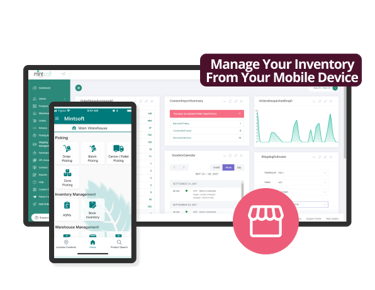
Mintsoft’s WMS system can help you streamline and automate your operations. Our custom features include real-time inventory tracking, branded customer portals, the facilitation of stock control methods like FIFO and FEFO, and a mobile picking app.
To find out more about Mintsoft’s warehouse management capabilities, please download our brochure.
A warehouse management system to help you to pick, pack and ship your way to success.
Warehouse management FAQs
What is 3PL warehouse management?
3PL stands for third-party logistics. This covers order fulfilment including receiving, warehousing, picking and packing, and shipping out packages.
What is the role of a warehouse in supply chain management?
Warehouses store stock and fulfil orders, helping to connect the production and distribution stages within the supply chain.
What is lean warehouse management?
Lean warehouse management refers to the processes used to streamline operations and reduce waste within a warehouse. Lean warehouse management helps save on resources and cut waste at every stage in a warehouse’s operations.
Warehouse Management Resources

Warehouse Management: Best Practices Guide
The Experts Guide to Warehouse Planning & Layouts

A Guide to Warehouse Management System (WMS) Implementation

WMS security: How secure is your data?

Calculating the ROI of a Warehouse Management System

10 Key Features of a Warehouse Management System

Warehouse Management Process & Challenges Guide

The Complete Guide to Warehouse Management Systems

What Is Picking And Packing? (Definition & Best Practice)

Why are Warehouse Stock Control Systems so Important?

14 Important Warehouse KPIs For Improved Operations

How To Overcome Warehouse Management Challenges With Software

The Definitive Guide to the Warehouse of the Future

Guide to ecommerce warehousing
Warehouse Robotics: Types, Pros & Cons